Make a confident decision by knowing what credentials matter, what questions to ask, and how to compare contractors fairly.
The problem, stated
Flooring installation is a skilled trade, and the difference between a good installer and an inexperienced one shows up in the finished floor. Poor subfloor prep, uneven seams, unsecured planks, or sloppy transitions all point to rushed or careless work. You cannot see these issues on the day the contractor leaves, but they emerge as creaking, gaps, or loose boards within months. Beyond the visible work, there is the code-compliance question: if your home was built before 1978 and you are tearing out old flooring, the contractor needs to follow lead-safe renovation rules. Many homeowners do not know this rule exists until the work is done.
A contractor who asks careful questions about your home's age, the existing floor, the subfloor condition, and your humidity levels is one who understands the real variables that affect flooring longevity.
When to call a professional
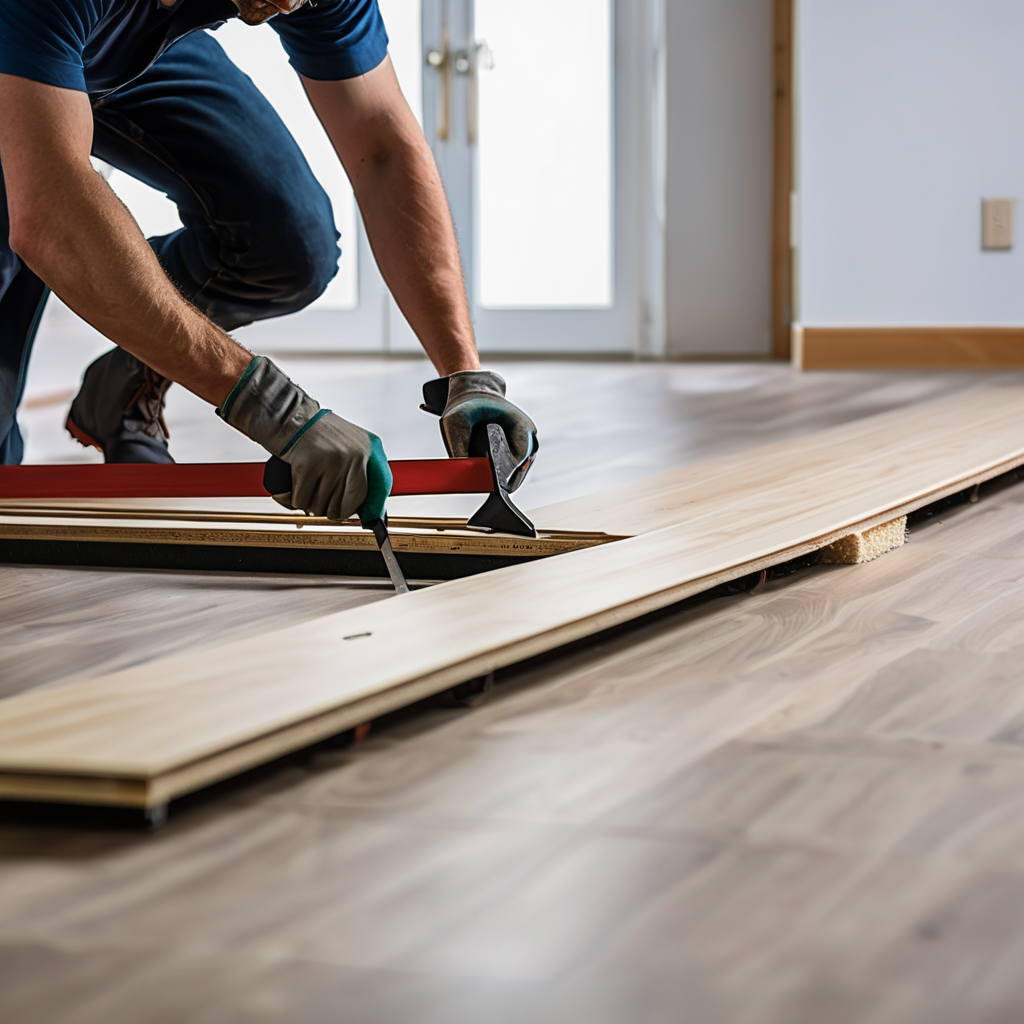
Professional installers have the tools and experience to get seams tight and transitions smooth.
You can install luxury vinyl plank flooring yourself if you have patience and attention to detail, especially in smaller spaces like a bathroom or hallway. Hardwood installation, particularly prefinished hardwood that needs sanding and finishing, is much harder without experience. Radiant floor systems, specialty subfloors, or unusual layouts also call for a professional. If your existing floor needs removal and disposal, that labor alone justifies hiring someone. If you have any doubt about your subfloor condition or moisture levels, a professional inspection is worth the cost. Mistakes in subfloor prep are expensive to fix after the fact, and they cause problems for years.
Questions to ask before committing
Ask about the contractor's experience with different flooring types and the tools they use to assess your space.
Start by asking how many years the contractor has been installing flooring and what materials they specialize in. Ask to see photos of their recent work in person if possible, or ask for references from homeowners whose jobs were completed in the last 12 months. A contractor who hesitates to provide references is a warning sign. Ask whether they are licensed and carry liability insurance, and request to see the proof. Ask what the timeline is for your project and whether they schedule a moisture test before beginning. Do they include site cleanup and removal of old flooring in the estimate? What warranty do they offer on labor, and what does it cover?
What it typically costs
Flooring material costs vary by type: luxury vinyl plank runs $2 to $6 per square foot, laminate $1.50 to $4, prefinished hardwood $4 to $10, and natural stone or tile $3 to $15. Installation labor typically adds $3 to $12 per square foot, depending on the material and how much prep the subfloor needs. A 400-square-foot room with mid-range luxury vinyl plank and professional installation might total $2,400 to $4,400, all in. Hardwood floors cost significantly more. If old flooring removal is needed, budget an extra $1 to $3 per square foot for that work. Many contractors will offer a discount if you hire them for multiple rooms or entire floors.
The options compared
Material
Water Resistance
Durability
Installation Difficulty
Cost per sq. ft.
Luxury vinyl plank
Full waterproof
10–15 years, mid-traffic
DIY-friendly
$5–8 installed
Laminate
Water-resistant (not proof)
8–12 years, light-traffic
DIY-friendly
$3–5 installed
Prefinished hardwood
Not waterproof
20–30 years, light-to-mid traffic
Professional
$10–15 installed
Tile or stone
Full waterproof
30+ years
Professional
$8–20 installed
Costs vary by region and quality tier. High-traffic areas may benefit from a more durable option even if the price is higher upfront. The cheapest material is not always the best value over the floor's lifetime.